
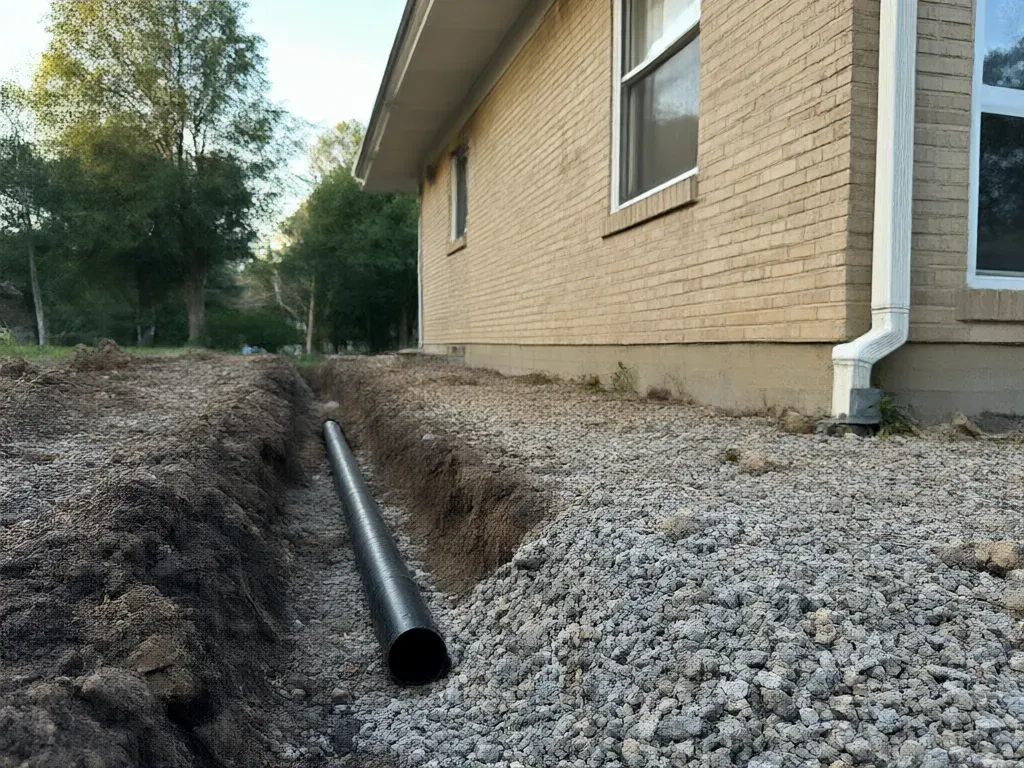
Foundation Drainage and Water Management in Carrollton, TX
Carrollton Superior Foundation Repair offers professional foundation drainage and water management in Carrollton, TX with 19 years of experience fixing the water problems that move slabs. We install French drains, surface drains, downspout tie-ins, root barriers and regrading, so water leaves the foundation instead of soaking the clay under one side of it. Most drainage jobs take 1 to 2 days and carry a 5-year workmanship warranty.
Expansive clay moves when its moisture changes, and uneven moisture makes it move unevenly. A downspout dumping against the grade beam, a flower bed sloping toward the house and a bare west wall drying out in August can each drop a corner. French drains run $32 to $48 per linear foot, and a downspout tie-in to an underground drain runs $350 to $750.
Get a FREE Estimate
Or call (469) 896-0932
Foundation Drainage and Water Management Options
Most lots need two or three of these working together. The inspection shows which ones.
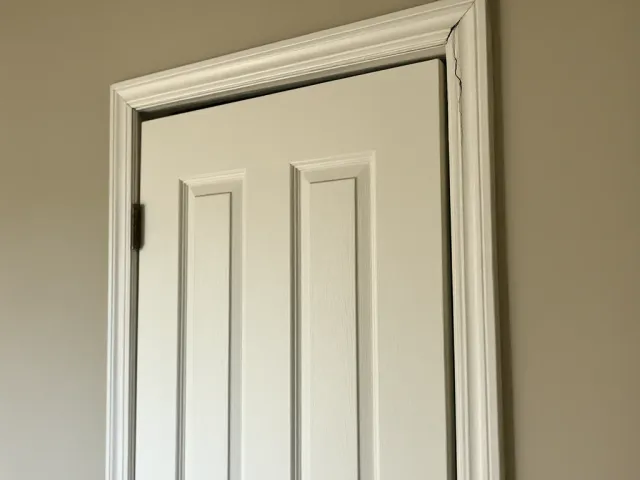
French Drains Along the Foundation
A French drain catches water moving through the soil and carries it away from the slab. We dig the trench, line it with filter fabric, lay perforated pipe in washed gravel and slope it to a discharge point. They run $32 to $48 per linear foot.
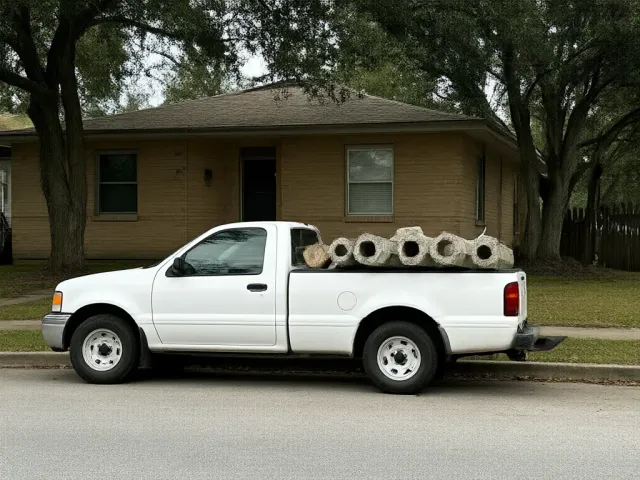
Downspout Tie-Ins and Surface Drains
Every downspout should discharge at least 5 feet from the foundation. We run solid pipe underground to a pop-up emitter well out in the yard, and add catch basins where water pools along a wall. Each downspout tie-in runs $350 to $750.
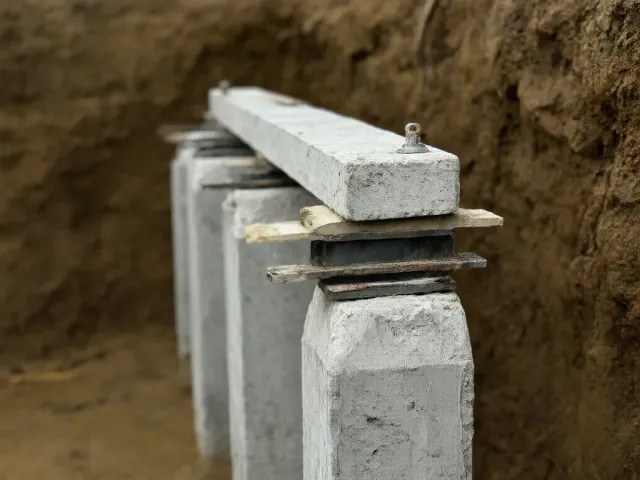
Foundation Grading and Flower Bed Correction
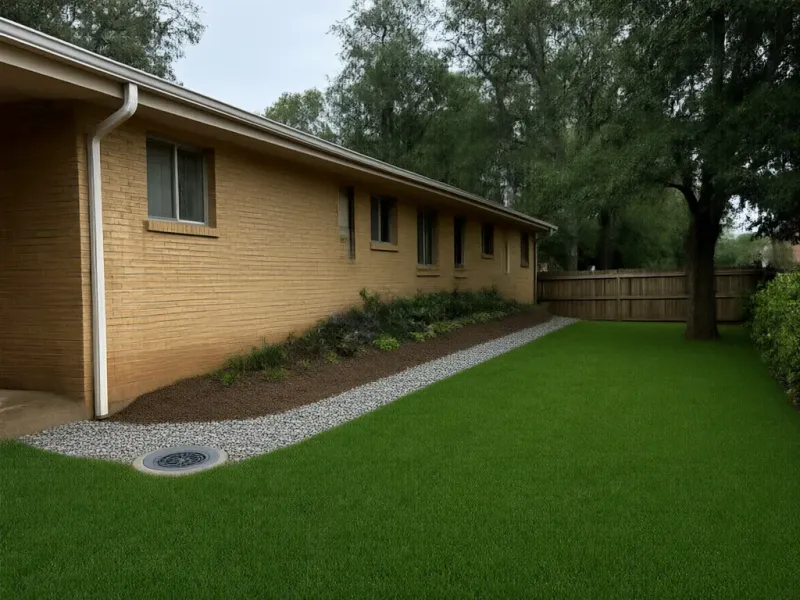
The residential code wants 6 inches of fall in the first 10 feet away from the foundation. Over the years, mulch and bed soil pile up until the ground slopes back toward the brick. We pull it down, reshape the grade and keep soil below the brick ledge and weep holes.
Foundation Root Barriers
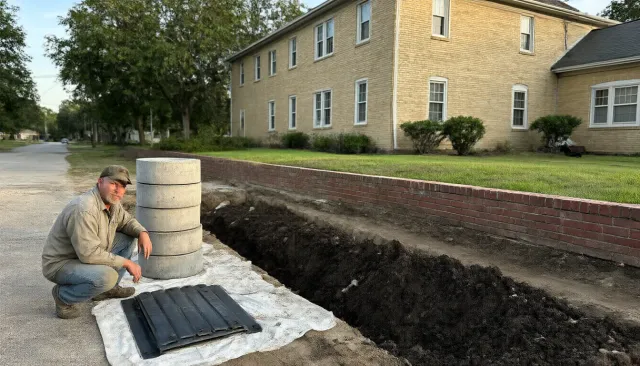
Any tree within 15 feet of the slab is worth a conversation. A root barrier trenched 36 inches deep between the tree and the house keeps roots from pulling water from under the slab, at $35 to $55 per linear foot. Most homeowners keep the tree.
Foundation Watering Systems
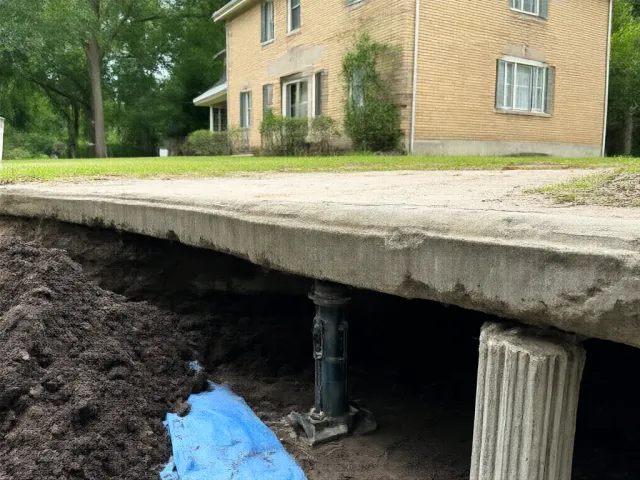
Clay that stays evenly damp moves a lot less. We lay a soaker hose 18 inches out from the slab, often on a hose timer, and show you how to run it 20 to 30 minutes on dry summer days. It's the cheapest foundation work there is.
Crawl Space Drainage for Pier and Beam Homes
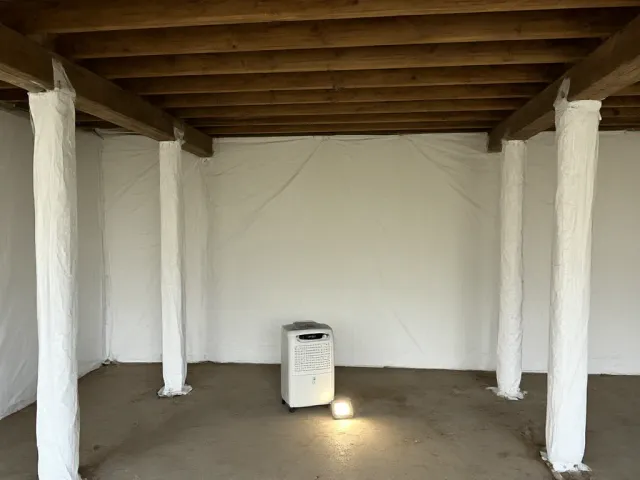
Water that runs under a pier and beam house sits there and softens the pier footings. We fix the outside grade first, then add drainage at the low side of the crawl space and a 20-mil reinforced vapor barrier if the ground stays wet.
Before and After
Signs Your Foundation Has a Drainage Problem
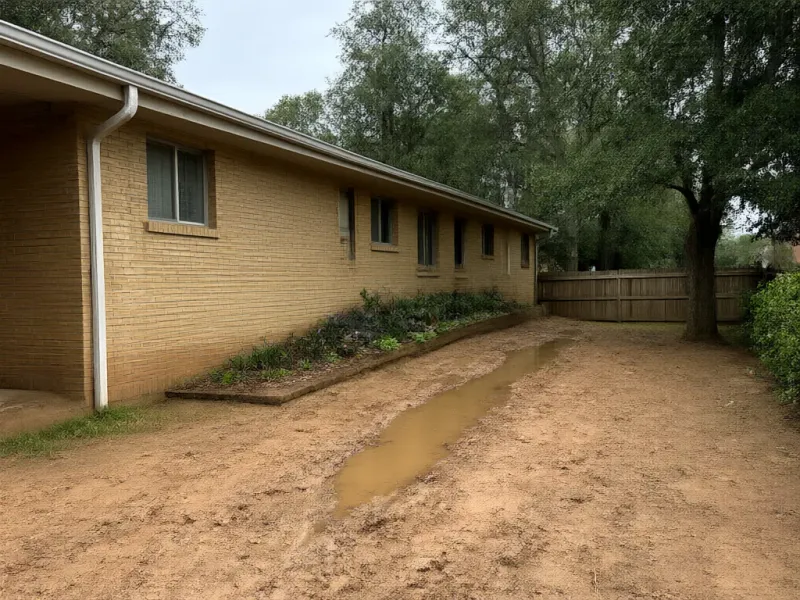
Go outside the next time it rains hard and watch where the water goes. Puddles that sit against the slab for a day, soil washed out under a downspout, or a gutter that overflows at the same corner every storm are all telling you something.
Then look again in August. A gap between the soil and the grade beam you can fit a finger in means the clay has pulled away from the house. White powder on the brick near the ground, a musty smell from the crawl space, or cracks clustered at one downspout corner all point to water.
Have you noticed the same corner acting up every spring and every summer? That's usually water first and soil second.
Why Water Moves Carrollton Foundations
Carrollton's west side is built on Eagle Ford clay, the weathered remains of an old shale formation. Soak it and it expands, dry it out and it pulls back, and a slab on top only moves when the moisture under it changes unevenly. That's why one wet corner and one dry corner do more damage than a whole wet yard.
Down by the Elm Fork, where McInnish Park goes under water when the river is up, we look harder at how surface water leaves a yard. On higher ground away from the river, the bigger problem is usually the house's own roof water.
A couple once called us about a stair-step crack by their garage. They'd been told it needed piers down that whole wall. The survey said the slab was fine except right under a downspout that dumped a roof valley against the foundation. The fix was a $480 downspout tie-in, some fill to correct the grade and a mortar repair.
Drainage Before Piers, or Drainage With Them
When movement is mild and the survey points to a water source, we fix the water first and ask you to watch the house through a wet spring and a dry summer. If it keeps moving, then it's a pier conversation. That order saves a lot of homeowners a lot of money.
When piers are needed, drainage protects the repair. Pilings hold the piered section, but the rest of the slab still sits on clay. Poor drainage on an unpiered side can start the next problem right next to the last one.
Drainage work carries a 5-year workmanship warranty. Pier work carries a lifetime transferable warranty. Done together, they cover both halves of what moves a foundation here.
Our Drainage and Water Management Process
Find the water path
We survey the floor, walk every downspout and bed, and run a hose where we need to see how water moves.
Drainage plan
You get a drawing with pipe runs, grade changes and discharge points, plus an itemized price, within 24 hours.
Mark the utilities
We call in a utility locate before any trench gets dug, so gas, water and cable lines are flagged first.
Install
Most drainage jobs take 1 to 2 days: trenching, pipe, gravel, grading and sod or bed cleanup.
Flow test and warranty
We run water through every line to confirm it discharges where it should, then hand over the 5-year warranty.
Foundation Drainage Questions
Can better drainage fix a foundation without piers?
Sometimes, yes. If the survey shows mild movement and a clear water source, fixing the water can stop the movement. If a section has already dropped a long way or keeps dropping after the drainage is fixed, it needs piers.
How far should my downspouts discharge from the foundation?
At least 5 feet. Splash blocks next to the brick don't count. An underground tie-in to a pop-up emitter in the yard is the most reliable way to get roof water away from the slab.
Do I need a French drain or just better grading?
Grading handles surface water. A French drain handles water moving through the soil, usually on a lot where a neighbor's yard or a slope sends water toward the house. Many lots only need grading and downspout tie-ins.
Will a root barrier hurt my tree?
A barrier on one side of a healthy tree usually doesn't. Roots on the other side keep feeding it. We trench 36 inches deep and keep the barrier as far from the trunk as the space between the tree and the house allows.
How often should I water my foundation?
In dry summer stretches, run a soaker hose 18 inches out from the slab for 20 to 30 minutes on dry days. You're aiming for evenly damp soil, not mud. Skip it after a good rain.
Get Your Foundation Drainage Checked
Call (469) 896-0932 or send the form. We'll survey the floor, trace where the water goes and tell you whether drainage alone will do the job.