
Foundation Piers in Carrollton, TX
Carrollton Superior Foundation Repair offers professional foundation piers and concrete piering in Carrollton, TX with 19 years of pier installs and 2,900+ foundations repaired since 2007. We install pressed concrete pilings, drilled bell-bottom concrete piers, steel push piers and helical piers, and an independent engineer decides which one goes under your slab. Every pier gets a cap block and steel shims, never wood, and every pier we install carries a lifetime transferable warranty.
Most of the foundation piers we set are pressed pilings: precast 6-by-12-inch concrete cylinders, 5,000 PSI, stacked one at a time and pressed with a hydraulic ram until they hit refusal. Around here that usually happens between 10 and 20 feet. When the engineer wants a verified load or a deeper bearing layer, we switch to steel push piers or helical piers. You see the pier type, count and spacing on a written plan before anyone picks up a shovel.
Get a FREE Estimate
Or call (469) 896-0932
Foundation Pier Types We Install
Four pier systems cover almost every slab and pier and beam house we see. Here's what each one is, where it earns its price, and what it costs installed.
Pressed Concrete Pilings
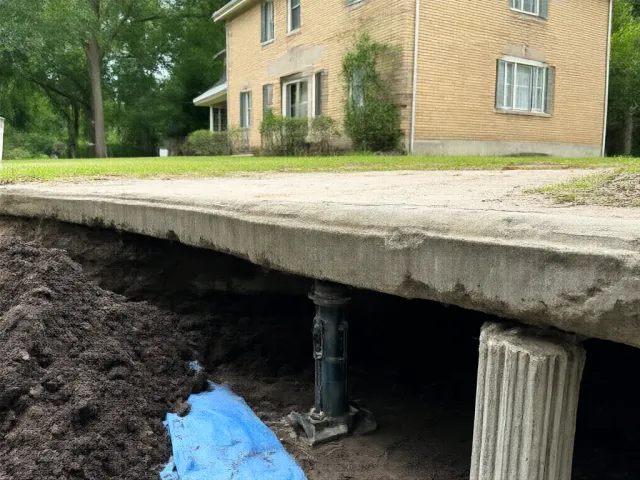
Concrete piering is the workhorse under most slabs here. We stack precast 6-by-12-inch cylinders rated at 5,000 PSI and press each one with a hydraulic ram against the weight of the house until it won't go any deeper. Most reach refusal between 10 and 20 feet. Installed exterior pilings run $325 to $450 a pier.
Drilled Bell-Bottom Concrete Piers
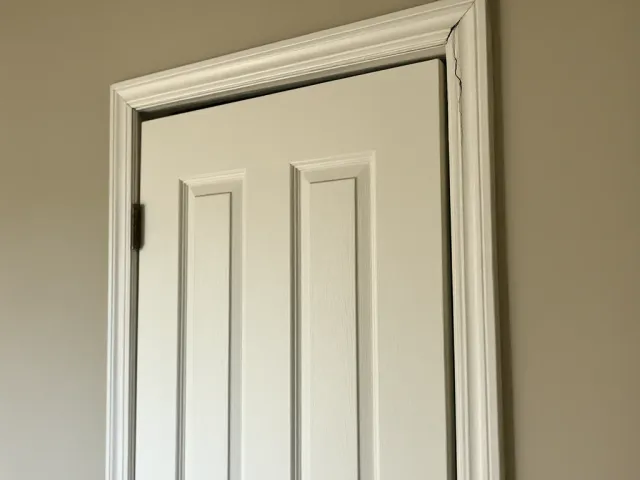
We drill a 12-inch shaft, usually 10 to 15 feet deep, then flare the bottom into a 30-inch bell. Four 1/2-inch rebar run the length of the shaft, and it's filled with 3,000 PSI concrete. The bell spreads the load across firmer soil, so the active clay above it has less say in what the house does. Expect $850 to $1,250 a pier.
Steel Push Piers
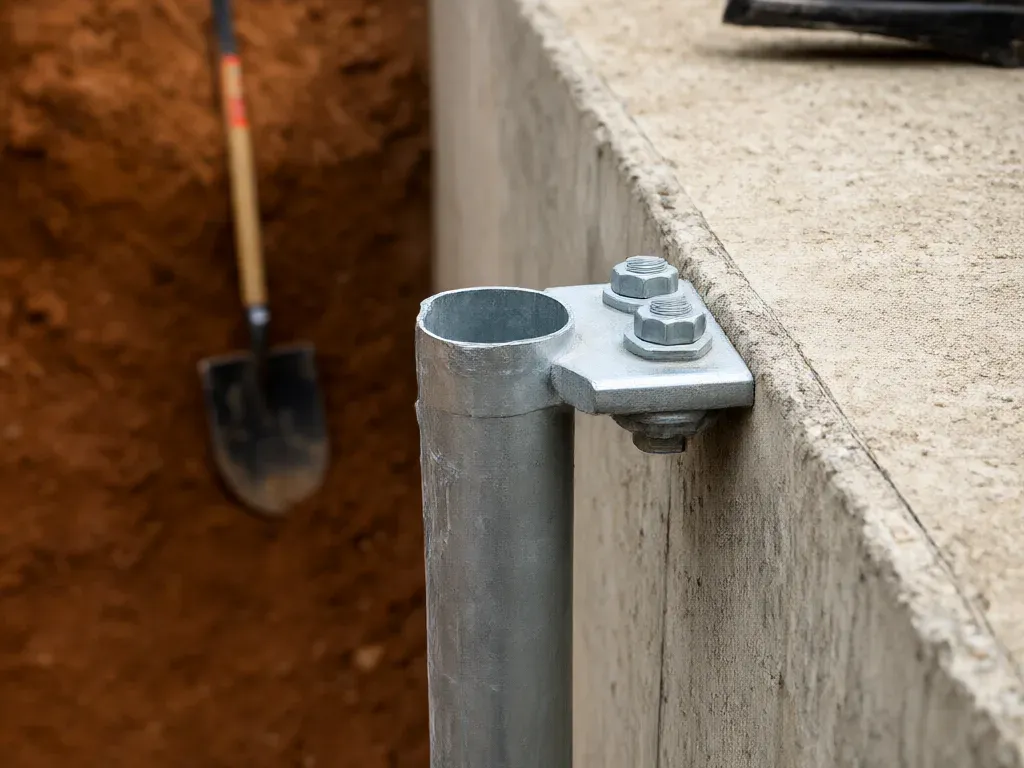
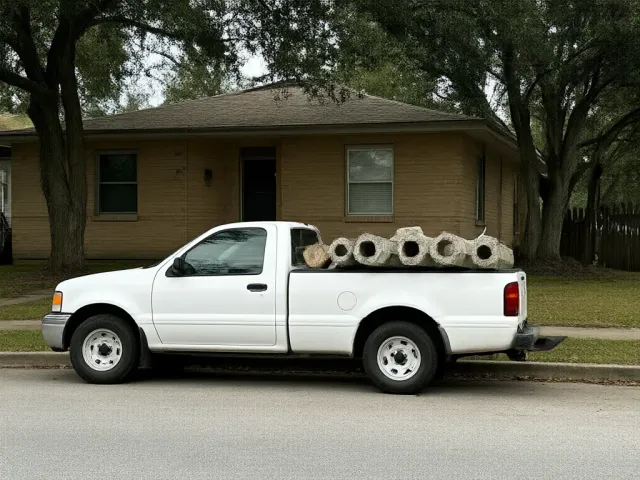
Steel push piers are 3-inch galvanized pipe driven in 42-inch sections, using the structure's own weight as the reaction. A bracket bolts to the grade beam, and sections go in one after another until the pier reaches load-bearing strata. The hydraulic pressure at the end of the drive gives the engineer a load number on paper. They run $1,250 to $1,900 a pier.
Helical Piers
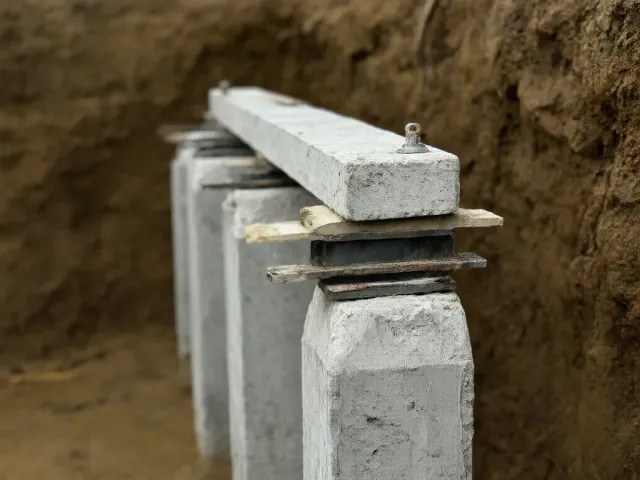
A helical pier is a 2 7/8-inch steel shaft with 10-, 12- and 14-inch helix plates, screwed into the ground with a hydraulic torque motor. Installation torque tracks capacity, so the engineer sets a target and we drive to it. Helicals don't need the weight of the house to push against, which makes them the answer for porches, additions and lighter structures. Expect $1,500 to $2,300 a pier.
Interior Foundation Piers Through the Slab
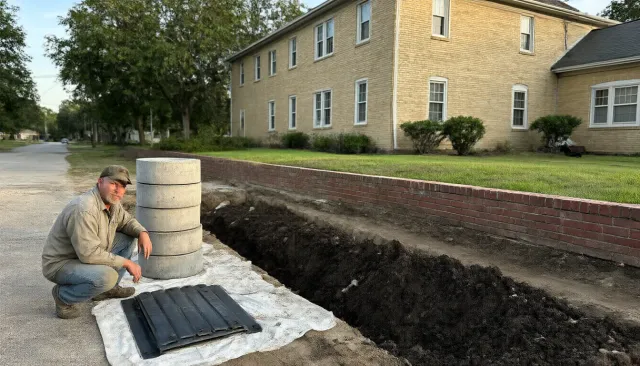
Some slabs sag in the middle, where no exterior pier can help, so the pier goes under the slab instead of beside it. We cut a breakout through the floor, set the pier, lift, and re-pour the slab patch. On post-tension slabs we locate the tendons before any cut. Interior piers run $650 to $950 a pier, with flooring replacement extra.
Pier Caps and Steel Shims
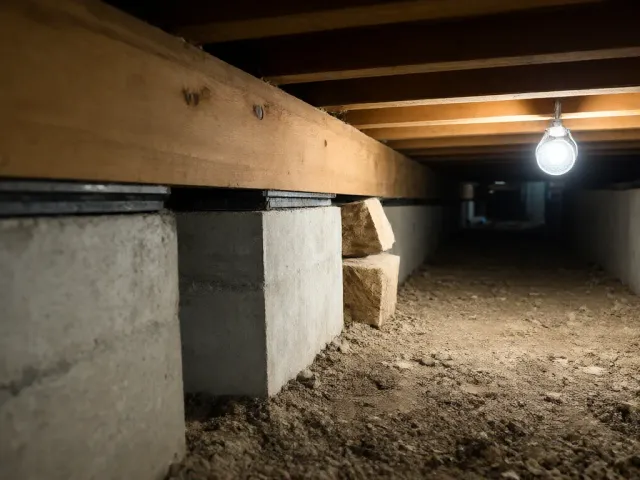
The top of the pier matters as much as the bottom. Each pier gets a cap block and a stack of steel shims set tight to the grade beam once the lift is done. Wood shims crush and rot, and stacked brick cracks, so we don't use either one on any pier.
Before and After
How the Engineer Picks a Foundation Pier
We don't pick the pier type standing in your driveway. After our free elevation survey, an independent professional engineer licensed in Texas reviews the readings, walks the house and writes a letter. That letter sets the pier type, the count, the spacing and the lift target. The engineer isn't on our payroll, and the $450 to $650 fee is passed through at cost.
Most of the time the answer is pressed pilings. A single-story brick home on a slab, sitting on clay that gives up refusal somewhere in the 10 to 20 foot range, is exactly what they're made for. Steel and helical piers are good products. On that house they mostly add cost.
Bell-bottom piers come up on heavy two-stories, room additions and lots with deep fill, where the engineer wants a wide bearing surface below the clay that swells and shrinks. Steel push piers and helicals come up when the engineer needs a verified load, or when pressed pilings won't reach refusal at a reasonable depth. That's a judgment call for the engineer, not for whoever is selling the job.
Questions to Ask About Any Pier Bid
Who wrote the engineering, and do they work for the contractor? How many piers, at what spacing, and where are they on a drawing? Are the engineer, the permit and the plumbing test their own line items, or folded into one number?
If a bid can't answer those three questions, it's a guess with a price on it. Ours answers all three in writing within 24 hours of the inspection.
Foundation Pier Spacing, Depth and Lift
Exterior piers go 6 to 8 feet on center along the grade beam. They run through the whole failing section the engineer marks, plus enough on each side to tie into concrete that isn't moving. Stop short and you just move the problem down the wall. We've been called back to a corner where another outfit set 4 piers on a section that needed 11.
Depth is set by the soil, not by us. A pressed piling goes until the ram can't push it any further. A bell-bottom goes to the depth the engineer specifies. Steel goes to load-bearing strata. We record what each pier did, and you get that record with your warranty paperwork.
The lift happens after every pier on the plan is set. Hydraulic jacks raise the slab in small increments while someone inside watches the manometer readings and the door frames. We stop at the engineer's target, not at dead flat. A slab that's been out of level for years has tile, drywall and drain lines that settled with it, and forcing the last bit is how they crack.
Then a licensed plumber runs a static test on the drain lines, plugged, filled and watched for at least 15 minutes. A pier job that lifts a slab onto a leaking drain line is a pier job you'll be paying for twice.
Foundation Piers Backed by a Lifetime Transferable Warranty
Every pier we install carries a lifetime transferable warranty. Should a piered section ever settle, the crew comes back and lifts it again, and you don't pay for it. If you sell, the warranty transfers free when the new owner sends the transfer form within 30 days of closing. Home inspectors and buyers' agents ask for it, so file it with your closing documents.
Clay keeps adjusting around new piers for a season or two. That's why you also get one free adjustment in the first 24 months after the lift. Most of the time that's a turn of the shims at one or two piers, not a new pier.
Our 3 pier crews are employees covered by workers' comp, not 1099 day labor. Texas has no statewide foundation contractor license, so the paperwork is how you tell a real pier company from a truck with a ram in the back. The City of Carrollton requires a permit for every foundation repair, with a pier plan designed and sealed by a professional engineer, and we pull it. We also carry general liability at $1 million per occurrence and $2 million aggregate, and we'll email the insurance paperwork before the first hole is dug.
Get a Written Foundation Pier Plan
Call (469) 896-0932, Mon-Fri 7:30am-6pm, and we'll schedule a free inspection within 2 business days. You'll have the pier type, the count, the spacing and the price in writing within 24 hours of that visit.